
Separate hardware functions first.
Compute systems, integrated circuits, wafer inputs, semicap equipment, and test instruments sit in different operating lanes.
Actionable Insight Report 003
A compact screen for AI chips, compute systems, semiconductor inputs, fabrication equipment, supplier platforms, and downstream U.S. production-network exposure.
Client decision supported
Compute systems, integrated circuits, wafer inputs, semicap equipment, and test instruments sit in different operating lanes.
The report makes the public-data boundary explicit: node, accelerator performance, packaging, and end-use require client-specific review.
The next diligence step is an HTS10, ECCN, supplier, data-center, customer, and contract-level exposure record.
Visual evidence in the report
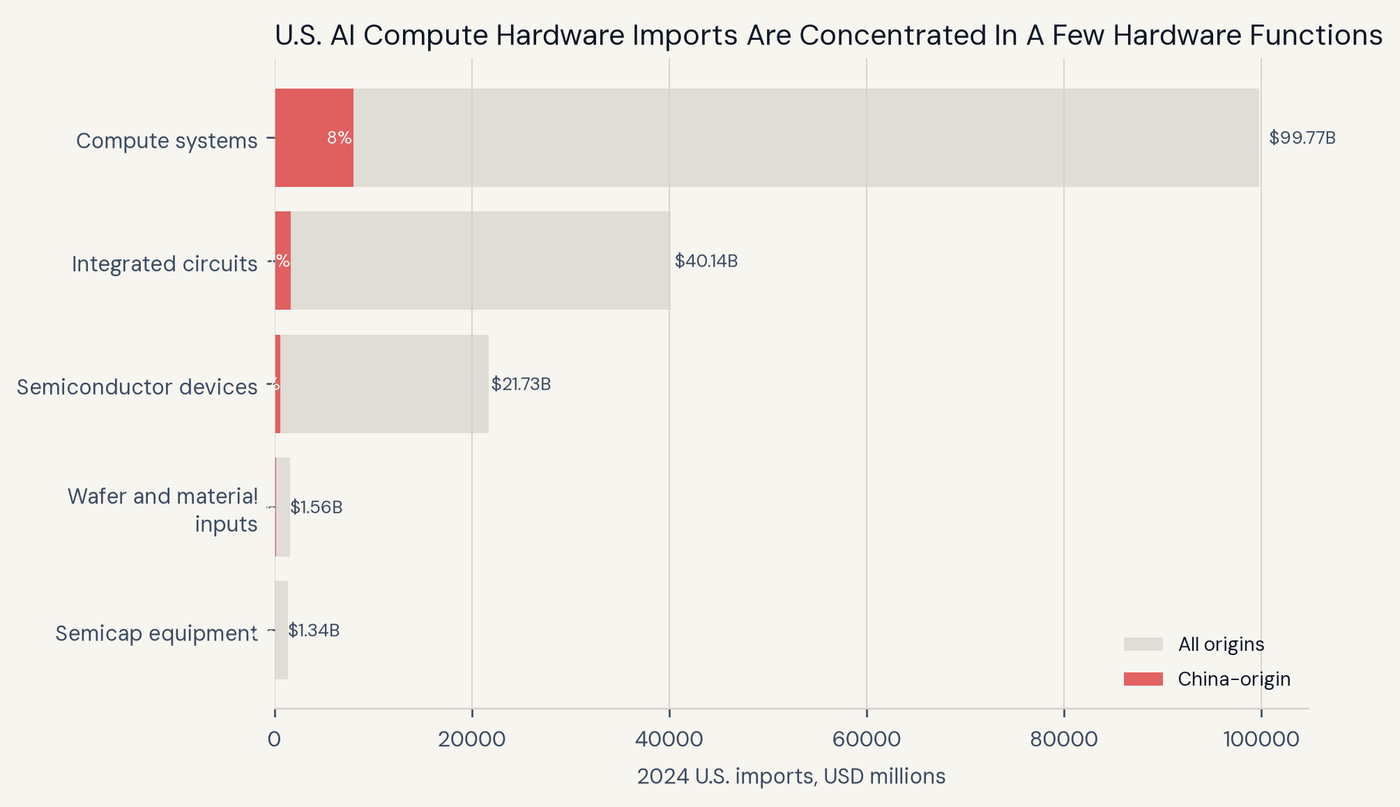 Trade exposure
Bars split total U.S. imports from China-origin exposure by operating function.
Swipe horizontally on mobile to inspect the full figure.
Where U.S. import value sits. Bars split total U.S. imports from China-origin exposure by operating function. Source: CEPII BACI HS02 V202601; OECD ICIO 2023 edition (2020 table). Analysts’ calculations.
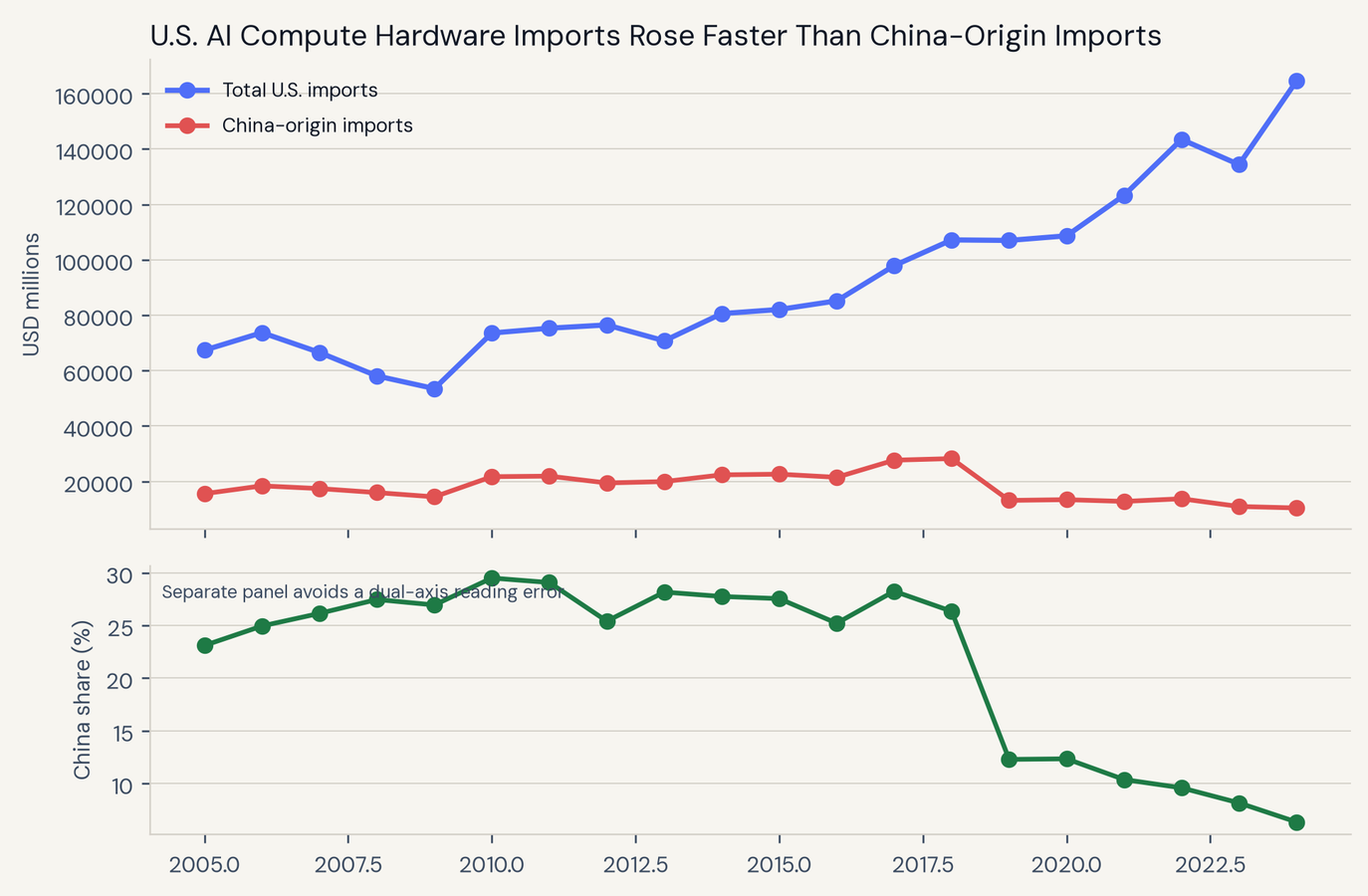 Time trend
The trend chart keeps total platform growth separate from China-origin share.
Swipe horizontally on mobile to inspect the full figure.
Scale and dependence are separated. The trend chart keeps total platform growth separate from China-origin share. Source: CEPII BACI HS02 V202601; OECD ICIO 2023 edition (2020 table). Analysts’ calculations.
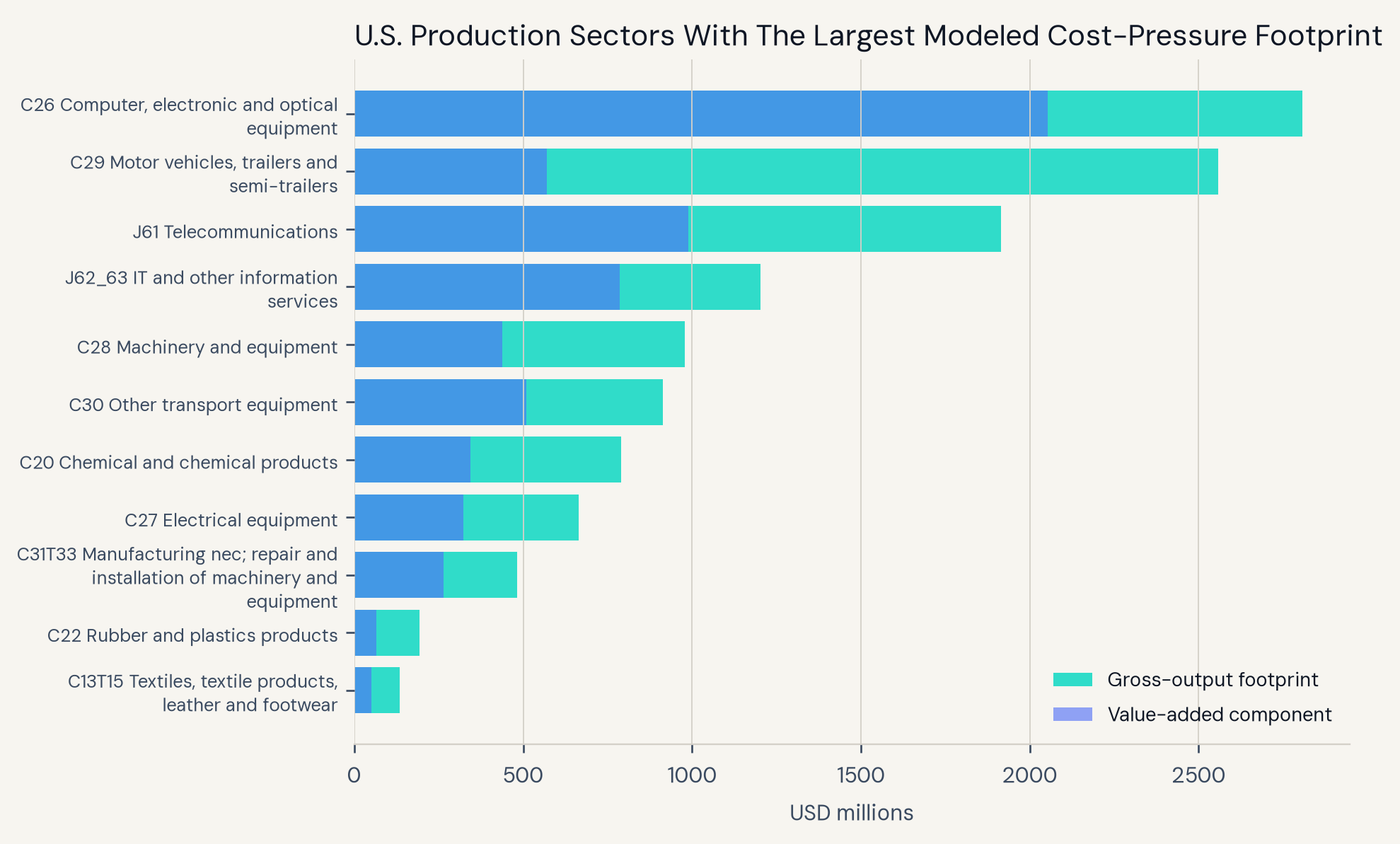 IO footprint
The ICIO screen maps direct China-origin exposure to downstream production sectors.
Swipe horizontally on mobile to inspect the full figure.
Which U.S. sectors carry cost-pressure incidence. The ICIO screen maps direct China-origin exposure to downstream production sectors. Source: CEPII BACI HS02 V202601; OECD ICIO 2023 edition (2020 table). Analysts’ calculations.
Source: CEPII BACI HS02 V202601; OECD ICIO 2023 edition (2020 table). Analysts’ calculations.
These figures are public-data screening tools for identifying products, sectors, and network nodes that warrant further diligence. They are not company-level bills of materials, qualified-supplier lists, tariff rulings, or causal forecasts; definitions, assumptions, reference years, and sources should be read with the report.
Read the full method and definitions in the PDFHow to use it
The report is designed for procurement, finance, compliance, data-center strategy, and industrial-policy teams that need a short evidence base before reviewing supplier-specific bills of materials and controls.
Translate the HS6 platform into an HTS10–ECCN–supplier–customer exposure register with named owners for compute units, ICs, wafer inputs, semicap equipment, test equipment, and repair lanes.